Gilternib 40 Mg (Gilteritinib) Price
Inquire NowContents
- 1 Gilternib 40 mg (Gilteritinib): A Targeted Breakthrough in Acute Myeloid Leukemia Treatment
- 1.1 What is Gilternib 40 mg?
- 1.2 Indications: When is Gilternib Used?
- 1.3 Mechanism of Action: How Gilternib Works
- 1.4 Dosage and Administration
- 1.5 Benefits of Gilternib 40 mg
- 1.6 Possible Side Effects
- 1.7 Warnings and Precautions
- 1.8 Use in Special Populations
- 1.9 Storage Instructions
- 1.10 About Everest Pharmaceuticals Ltd.
- 1.11 Final Thoughts
Gilternib 40 mg (Gilteritinib): A Targeted Breakthrough in Acute Myeloid Leukemia Treatment
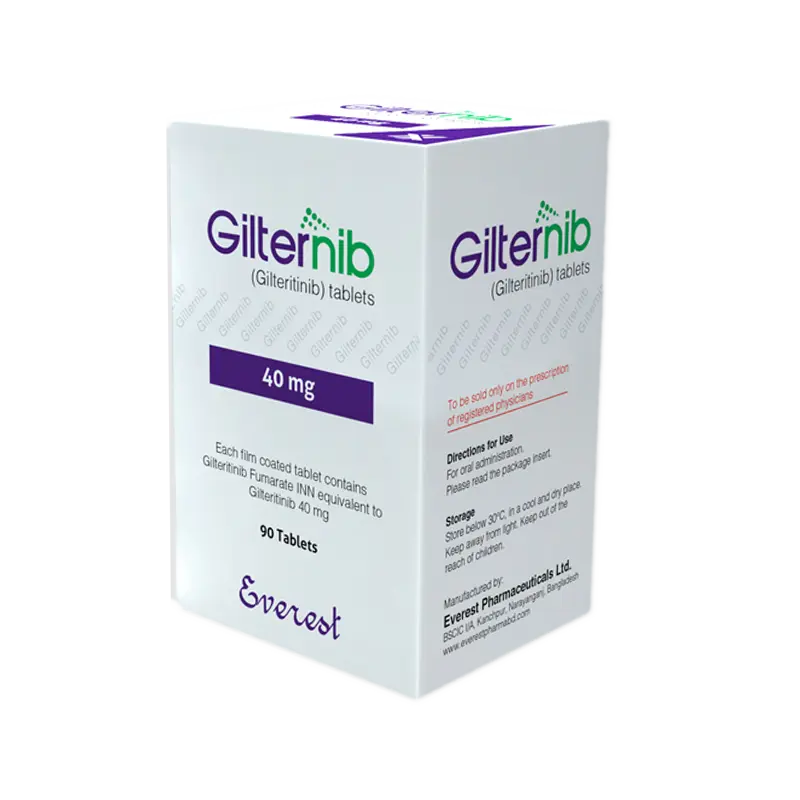
Cancer treatment has evolved significantly over the past decade, moving away from generalized chemotherapy toward more precise, targeted therapies. One such advancement is Gilternib 40 mg, a formulation of Gilteritinib, developed by Everest Pharmaceuticals Ltd. This medication represents a major step forward in the treatment of acute myeloid leukemia (AML), especially for patients with specific genetic mutations.
For individuals battling relapsed or treatment-resistant AML, Gilternib offers renewed hope by directly targeting the underlying cause of the disease rather than simply managing its symptoms. In this article, we’ll explore everything you need to know about Gilternib 40 mg, including how it works, its uses, dosage guidelines, benefits, and safety considerations.
What is Gilternib 40 mg?
Gilternib 40 mg is an oral anti-cancer medication containing Gilteritinib, a selective inhibitor of certain tyrosine kinases. It is primarily used in the treatment of AML patients who have a mutation in the FLT3 (FMS-like tyrosine kinase 3) gene.
FLT3 mutations are among the most common genetic abnormalities in AML and are associated with aggressive disease progression and poor prognosis. Gilternib works by blocking the abnormal signals generated by these mutated proteins, thereby slowing or stopping the growth of cancer cells.
Manufactured by Everest Pharmaceuticals Ltd., this drug is part of a growing portfolio of advanced oncology medications aimed at making life-saving treatments more accessible in regions like Bangladesh and beyond.
Indications: When is Gilternib Used?
Gilternib 40 mg is specifically indicated for:
Relapsed or Refractory Acute Myeloid Leukemia (AML)
- Patients whose cancer has returned after treatment
- Patients whose cancer has not responded to previous therapies
- Cases confirmed to have FLT3 mutation through diagnostic testing
This targeted indication ensures that the drug is used only in patients who are most likely to benefit from its mechanism of action.
Mechanism of Action: How Gilternib Works
To understand how Gilternib works, it helps to look at the biology of AML.
In many AML patients, mutations in the FLT3 gene lead to uncontrolled activation of signaling pathways that promote rapid cell division and survival of leukemia cells. These signals essentially “tell” the cancer cells to keep growing.
Gilteritinib acts by:
- Inhibiting FLT3 kinase activity
- Blocking downstream signaling pathways
- Reducing proliferation of leukemia cells
- Promoting apoptosis (programmed cell death)
By targeting the root cause of the cancer at a molecular level, Gilternib offers a more focused and effective treatment compared to traditional chemotherapy.
Dosage and Administration
The recommended dosage for Gilternib is:
- 120 mg once daily (typically three 40 mg tablets)
- Taken orally, with or without food
- Continued until disease progression or unacceptable toxicity
Important Instructions:
- Swallow tablets whole with water
- Take at the same time every day
- Do not crush, chew, or split the tablets
- If a dose is missed, take it as soon as possible on the same day
- Do not take an extra dose to make up for a missed one
Patients should follow their doctor’s instructions carefully, as dosage adjustments may be necessary based on individual response and side effects.
Benefits of Gilternib 40 mg
Gilternib offers several important advantages in AML treatment:
Targeted Therapy
It specifically attacks leukemia cells with FLT3 mutations, improving effectiveness.
Oral Convenience
Patients can take the medication at home without frequent hospital visits.
Effective in Difficult Cases
Provides a treatment option for relapsed or refractory AML patients.
Improved Survival Outcomes
Clinical studies have shown better survival rates compared to standard chemotherapy in certain patient groups.
Better Tolerability
Although side effects exist, targeted therapies like Gilternib are often more tolerable than traditional chemotherapy.
Possible Side Effects
While Gilternib is generally well tolerated, it can still cause side effects. These may vary depending on the patient’s overall health and treatment duration.
Common Side Effects
- Fatigue
- Diarrhea
- Constipation
- Nausea
- Muscle or joint pain
- Fever
- Elevated liver enzymes
Serious Side Effects
- Differentiation syndrome (a potentially life-threatening condition)
- QT interval prolongation (irregular heart rhythm)
- Pancreatitis
- Posterior reversible encephalopathy syndrome (PRES)
- Severe infections
Patients should immediately report symptoms such as:
- Sudden weight gain
- Difficulty breathing
- Chest pain
- Severe headache or confusion
Early detection of side effects is critical for safe treatment.
Warnings and Precautions
Before starting Gilternib, several precautions must be considered:
Differentiation Syndrome
This is a serious condition associated with rapid changes in leukemia cells. Prompt medical attention is required.
Cardiac Monitoring
Regular ECG tests are recommended to monitor heart rhythm.
Liver Function
Periodic liver function tests should be performed during treatment.
Electrolyte Monitoring
Imbalances in potassium or magnesium levels should be corrected before and during therapy.
Drug Interactions
Gilternib may interact with:
- Strong CYP3A4 inhibitors (e.g., antifungal drugs)
- CYP3A4 inducers (e.g., certain antibiotics)
- Medications that affect heart rhythm
Always inform your doctor about all medications you are taking.
Use in Special Populations
Pregnancy
Gilternib may cause harm to the unborn baby. Women of childbearing age should use effective contraception during treatment.
Breastfeeding
Breastfeeding is not recommended while taking this medication and for some time after the last dose.
Pediatric Use
Safety and effectiveness in children have not yet been established.
Elderly Patients
Older adults generally tolerate the drug well, though close monitoring is advised.
Storage Instructions
To maintain the quality of Gilternib 40 mg:
- Store below 30°C
- Keep in a dry place away from direct sunlight
- Do not use expired medication
- Keep out of reach of children
Proper storage ensures the drug remains effective throughout its shelf life.
About Everest Pharmaceuticals Ltd.
Everest Pharmaceuticals Ltd. is a well-known pharmaceutical manufacturer in Bangladesh, recognized for producing high-quality, affordable medications. The company focuses on specialized therapeutic areas such as oncology, nephrology, and infectious diseases.
With products like Gilternib 40 mg, Everest Pharmaceuticals is contributing to the availability of advanced cancer treatments in regions where access to such therapies was previously limited.
Final Thoughts
Gilternib 40 mg (Gilteritinib) is a powerful example of how modern medicine is transforming cancer care. By targeting the FLT3 mutation directly, it provides a more precise and effective treatment option for patients with acute myeloid leukemia—particularly those who have not responded to traditional therapies.
While it offers significant benefits, Gilternib is a potent medication that requires careful medical supervision. Regular monitoring, adherence to prescribed doses, and awareness of potential side effects are essential for achieving the best possible outcomes.
For patients and caregivers navigating the challenges of AML, Gilternib represents not just another treatment—but a meaningful advancement in the fight against cancer.